Showing posts with label Czech Republic. Show all posts

Tuesday, November 9, 2010

WWII and the Czech Republic

On Sunday, November 7th, we traveled to Lidice and Terezin, two towns located relatively close to Prague in Bohemia. These cities are modern parts of the Czech Republic; however, they are most renowned for their history during World War II and Nazi occupation of the Protectorate of Bohemia and Moravia. Lidice was a small village that was randomly selected for complete destruction for Nazi revenge, and Terezin was a former Habsburg fortress and prison that was converted into a holding concentration camp for Bohemia Jews.


Our first stop on the trip was Lidice, which is noted because of the atrocity that occurred there in 1942. After Reinhard Heydrich, one of Adolf Hitler’s favorite commanders was assassinated in Prague by Czech paratroopers, the Nazis decided to randomly destroy two Czech cities as a sort of revenge. Lidice was one of these cites which was devastated not only physically but also in its population. Every single man over the age of 14 in the town was lined up and murdered in a firing squad by the Nazi SS officers. The remaining women and children were shipped off to concentration camps or Germany, where many were killed or forcibly adopted by German families. This horror is unimaginable, and it is unique because it was not related directly to the Jewish “problem” and the Nazi Holocaust. Today, this awful event is commemorated in a memorial and museum in the new town of Lidice. I was particularly struck by this event because the horrors done to the children of the town. Not only were they separated from the parents and siblings, many were sent to live with German families instead of being murdered just because they looked “more German.” It is hard to believe that a whole city was just wiped off the face of the earth in one day.


The second and more in-depth part of the day trip was Terezin, a Jewish holding camp during the Nazi occupation of Czechoslovakia. Many of the Jews of Bohemia and Moravia, including those from Prague, were shipped to Terezin to wait to be taken to other concentration camps in Germany and Poland. Although life was certainly horrific in the despicable conditions that the Nazis forced Jews to live in, Terezin was relatively better than most other concentration camps. I was surprised to learn that there was such a cultural life for the Jews forced to live in this camp, when the situation during WWII had become so desperate in other places of the Nazi occupation. Compared to my previous visit to Auschwitz-Birkenau, I was not as emotionally moved by Terezin. While it is difficult to comprehend the senseless horrors of the Holocaust, there is certainly something to be said of the difference between a holding camp and an extermination camp. Overall, it was very interesting to see how the Czech Jews were particularly affected by the Holocaust.


The histories of Lidice and Terezin are awful and difficult to comprehend by just seeing pictures and stories in museums; however, it was a powerful trip that helped me further understand the modern Czech and Jewish history of the World War II period.

Sunday, October 10, 2010

Český Krumlov and Southern Bohemian History

This past weekend, my program took us on a 3-day, 2-night trip to the region of Southern Bohemia. The specific topic of the trip was Czech history for our classes, but the weekend was more of a vacation than a lesson.


We began our trip 100 km south of Prague on Friday morning in the small town of Tábor. This city, named after the mountain in Jordan where it was believed that the Transfiguration of Christ took place, was the historical seat of the Hussite movement in the Czech lands. The Hussites were a religious group who fought against the sins of the Catholic Church in the Czech lands during the Reformation, and it is named after its leader Jan Huss, who was burned at the stake as a heretic. Jan Huss has become a hero of the Czech people under the Protestant history of this land.


During our brief morning in Tábor, we toured the church and town square. After lunch at a local Czech restaurant (included for free), we also saw the undergrounds of Tábor, which were used to connect the residents of the town after World War II. The weather during the weekend was amazing and crisp, and there is no more beautiful place for autumn and the changing of the leaves than in Bohemia.


Next stop on our tour was Český Krumlov, where we spent the next two days exploring the sights and experiences of the most famous tourist town in the southern Czech Republic. The entire town in walkable in just 10 minutes, but the lack of sights does not diminish the amount of interesting things to do. Pictured above is a panoramic view of the famous Krumlov castle, which is a UNESCO protected heritage sight.


After eating dinner (again, included) on the Vlatava river at a little patio pub, we called it an early night to rest up for our full day on Saturday. In the morning, we went on a tour of the castle grounds with our accompanying history professor. The most impressive sight was the Baroque theatre, the most beautiful and well preserved in all of Europe.


Later that afternoon during our free time, we rested up and sat down again at a pub on the Vlatava River to enjoy an Eggenberg, the traditional Czech beer of Krumlov. The above picture is a view of the castle from the place where we sat down for our <$2 beers. After shopping a little around the shops of Krumlov, we had dinner at a vegetarian restaurant to shy away from all the heavy Czech cuisine we'd be subjected to all weekend. A night out on the town (aka seeing all 2 bars and 1 club) in this small town, and we were ready to head back to Prague.


Třeboň was our final stop on Sunday on our all-inclusive tour of Souther Bohemia. Instead of touring the historic town center, our programming leaders took us to the carp-harvesting festival. As you may know, the Czech Republic is entirely land-locked, so all seafood must come from ponds and lakes. In this particular town, there is a big festival when they begin the harvest (pictured above), which includes traditional Czech food, candy, sweets, toys, and, of course, carp of all preparations.


The last activity before the bus ride back to Prague was a tour of the Regent brewery. It is a famous beer of the town of Třeboň, and we were given an exclusive tour of the brewing facilities. The guide only spoke Czech, so our professor had to translate most of the tour - beer brewing vocabulary is pretty difficult, too! After seeing the beer-making process up close, we went down into the freezing and dark beer-curing cellars. There, our guide gave us each a large cup of fresh beer from the supply to taste before it was even bottled!


After the tour, we were each given a free sampling of Regent beers and taken to lunch at the brewery pub. A warm mushroom soup, potato pancakes, and honey cake dessert made for a great end to the trip. Overall, it was an incredibly pleasant and relaxing vacation from the hustle-and-bustle of Prague..and almost every cost was included in our program tuition! This week, I am working the Forum 200, which I will be sure to update you on soon.


Last but not least, I just booked an inexpensive flight back to PARIS FOR THE FIRST WEEKEND OF DECEMBER! I'm so excited to go back to my home this summer, to use my French, and to see all the beautiful Christmas-time decorations. À bientôt!

Tuesday, October 5, 2010

Třebíč and Moravia

This past Sunday, my History of Jews in Bohemia and Central Europe course traveled to the Eastern half of the Czech Republic, called Moravia. We made our way by bus about 2.5 hours southeast of Prague to a small town named Třebíč. This city is most famous for its Jewish heritage, even though no more Jews currently live in the town since the end of World War II and the Holocaust.


Besides the natural beauty of the Moravian region, Třebíč is home to a UNESCO World Heritage Site because it contains the last standing Jewish ghetto in all of Europe! A ghetto is the part of a European city in which Jews were forced to live from the Middle Ages up through the 20th century in some cases. Ghettos were separate from the regular city's life, and conditions were usually much worse. The situation historically in Třebíč was slightly better for Czech Jews because there was some rapport and business relations between the Jews and Gentiles.


Over 4000 Jews lived in the small town at the start of World War II, but after the German Nazi occupation of Czechoslovakia, only 10 Jews remained of the population. The rest were subject to the Holocaust, and survivors did not return to the city. Today, however, the population is very proud of its Jewish heritage; and the city has become somewhat of a tourist destination.


Our teacher, a rabbi, took us on a guided tour of the Jewish ghetto to learn more about the structure and daily life of Jewish in Central Europe. After a hearty lunch at a Czech restaurant, we visited the Jewish cemetery to learn more about the history of Třebíč Jews. It is interesting to note that many Holocaust victims were later memorialized here even though their remains were not recovered. Also, many of the graves have been "vandalized," as the family members returned and scratch any German language or references from their family tombstones and graves.


Overall, it was an educational experience, but it was certainly a long day in the blustery Moravian cold. Next weekend, I will be taking a 3-day trip to the South of Bohemia with my history course to explore the towns of Cesky Krumlov, Tabor, and Trebon!

Sunday, September 12, 2010

Kutná Hora and Bohemia

One week of intensive czech class down, one week to go! This Saturday, we took a required day trip to a city in the region of Bohemia named Kutná Hora. The Czech Republic is divided into three regions: Bohemia, Moravia, and Silesia. Prague and Kutná Hora are both located in Bohemia. Kutná Hora was famous in the 13th century for its silver mining. Much like the gold rush of 1849 in California, the city became a hotstop in the Middle Ages, once rivaling Prague and other European capitals in its power and wealth.


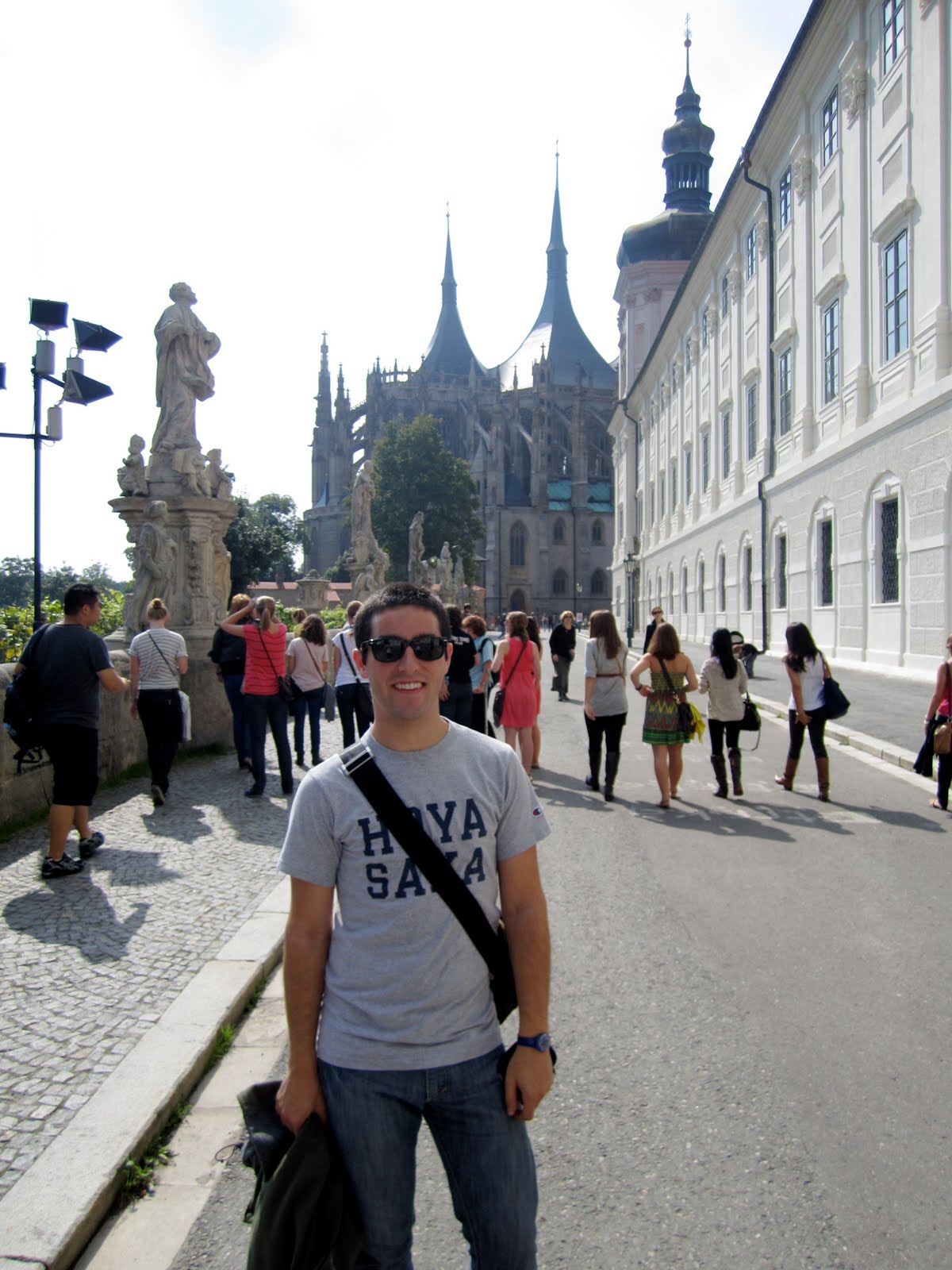
After the one hour drive, we were split into several groups. My group was lead by the Art & Architecture of Prague course professor, so it was nice to meet her and learn from her even before our course begins next week. The city is in a picturesque valley, and the picture below shows me in front of the large gothic St. Barbara Cathedral in the historical center. I know there's more pictures than text in this blog post, but there really was so much to see in the Czech Republic this weekend!


The program provided us lunch at a traditional czech pub. Nothing like chicken, potatoes, mushroom soup, bread, and, of course, beer to send you into a food coma for the rest of the day.


While in Kutná Hora, we took a guided tour of some of the silver mines. The tour guide only spoke minimal English, so we really had to pay attention and watch our surroundings. Over 100 feet below the surface of the ground, we walked the the criss-cross of networks to learn more about the terribly difficult life on a miner in the Czech Republic. The silver at once made this region prosperous and took a toll on the local population.


Perhaps the most fascinating part of Kutná Hora is the infamous Bone Chapel. That's right, the entire little church is decorated with the remains of 50,000+ victims of the Black Plague and Holy Wars. In order to make room for the massive amount of burials at this time, old bodies were dug up to make room for new ones. Make sure you click the picture above for a full-sized view!


The Bone Chapel is the work of a half-blind monk. Clearly, you'd have to be blind to not see how creepy this place would be. The concept of bone churches began in England and eventually spread to the rest of Europe. It was very difficult for me to find peace in this kind of space, knowing so many dead people's remains were surrounding me.


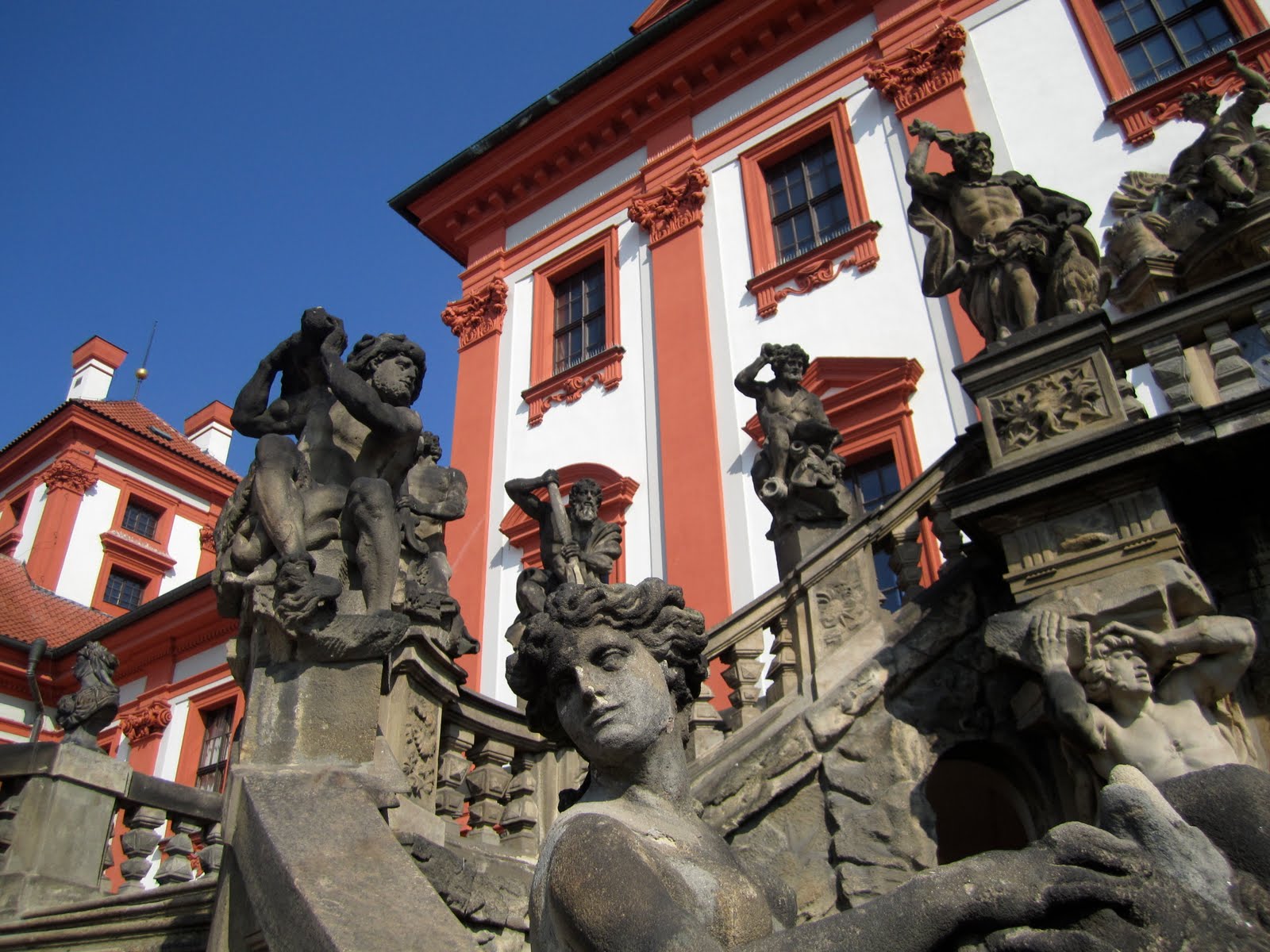
On Sunday, my Art & Architecture of Prague teacher took us to Troja Castle in the outskirts of Prague. This mansion was built in the 17th century in the pattern of the French Royal Palace of Versailles. It has many different types of style and architecture. And of course, there was a wine festival on the grounds this weekend too.


Above is the Great Room, which is the handiwork of two Dutch Jews who were paid to decorate this ornate residence. There are even parts of the Christian motif that have Hebrew in them, as the artisans were inserting their heritage into their work. We ended the day at the Old New Synagogue in the Josefov section of Prague. The former Jewish quarter is the home to the oldest surviving synagogue in all of Europe. The place is very small but ornate, lasting over 700 years through persecution, Holocaust, and communism.


It's back to the daily grind of Czech class here in Prague. We have a few planned activities at school this week, including an extracurricular expo and academic meetings with our professors. i will also be signing up for a few required weekend trips around the Czech Republic for our courses, in addition to my optional trip to Krakow, Poland. I'm very excited to be traveling around Central Europe this semester, and I will keep you posted as to where I decide to continue my adventures!